Future important opportunity Cameroon…
A NEW MARKET, NEW OPPORTUNITIES: CAMEROON
(By Selin Yıldırım)-
One of the markets most emphasized in Türkiye is African countries. Our country, in general, needs to further expand its export channels. Among the countries that are expected to become major hubs of attraction in the near future, Cameroon stands out.
Cameroon, which uniquely experiences both desert and rainforest climates, is the only African country that can accommodate these two different climate zones.
 Due to its position as a gateway to Central African countries, it holds significant strategic importance and is a member of the Central African Economic and Monetary Community (CEMAC).
In line with its 2035 development goals, Cameroon has been implementing major projects. By completing the Kribi Port — which will cost 5.5 billion dollars — the country is set to become one of Africa’s most important energy distribution centers and a key hub for natural gas and petroleum.
In the New Era, an Economic Shift
The new economic administration aims to move beyond the agriculture and tourism sectors and pursue expansion in the petroleum industry.
A PRESIDENT IN SERVICE OF HIS PEOPLE
The President of Cameroon holds extensive powers.
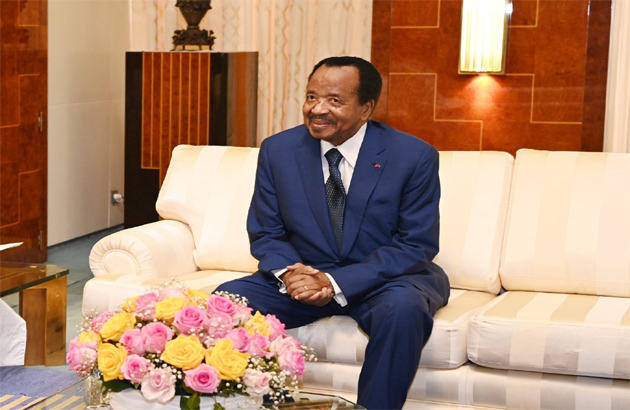
During his first official visit to Türkiye, President Paul Biya gave a fresh momentum to bilateral relations between the two countries.
In power since 1982, Biya has never lost an election. If he wins again, he will remain in office for another seven years, potentially serving as president until nearly the age of 100.
The announcement of the 92-year-old politician’s candidacy came after a political rift with key allies, particularly in the northern regions.
At least four other candidates are also running in the presidential election.
Members and supporters of the ruling Cameroon People’s Democratic Movement (CPDM) have been calling for Biya to run again since last year. As the party’s leader, he was already considered the de facto candidate.
In 2008, Biya removed the presidential term limit, giving himself the ability to run for the presidency indefinitely.
Paul Biya was first elected as the country’s leader on November 6, 1982.
INVITATION TO INVEST IN CAMEROON
 As a Turkish businesswoman, while I am pleased with the current level of relations between our countries, I do not consider this level sufficient when we think about the many areas where our cooperation can be further developed and expanded.
I believe that by fully seizing the opportunities and possibilities ahead of us, we can elevate our relations and cooperation to much higher levels that truly reflect the real potential of our nations.
Alongside the political relations between Türkiye and Cameroon, which are built on mutual respect and understanding, economic and commercial relations are also rapidly advancing.
With our investments in the healthcare sector, I believe it will not be difficult to broaden our scope and engage in business across a wider range of industries.
MAJOR PARTNERSHIP IN HEALTHCARE
We are here in this country to establish collaboration in the field of healthcare. Africa is witnessing a historic turning point in health. As the burden of chronic diseases continues to rise, digital health solutions are offering a powerful and promising way forward for the continent.
One of the most tangible examples of this transformation is a new initiative launched in the city of Limbe, Cameroon: a strategic partnership between Carna Health and the Cameroon Ministry of Health.
This innovative program focuses on tackling chronic kidney disease through digital technologies. With AI-powered screening tools, digital health records, and community-based early detection methods, the program aims to analyze the health data of over 30,000 individuals, identifying those at risk before symptoms even appear.
One of the strongest aspects of this project is its foundation in local partnerships. The program is being carried out in close collaboration with the Presbyterian Church Health System (PCC) in Cameroon. PCC’s strong community network and experience in healthcare delivery play a critical role in ensuring the program’s effective implementation and sustainability on the ground.
This partnership between Carna Health, the Cameroon Ministry of Health, and PCC offers a scalable model that can serve as an example not only for Cameroon but for the entire African continent.
We are landing in Yaoundé, the capital of Cameroon. While Yaoundé is the country’s capital, the heartbeat of trade is in the city of Douala.
One of the most distinctive features of Cameroon, a Sub-Saharan Central African country, is that it has been the only nation in the region with no unrest, civil war, or coup since 1982.
Having gained its independence from France in 1960, Yaoundé — the capital — is located in a lush, hilly landscape. The magical atmosphere of the rainforests and the abundance of tropical fruits are among the country’s most remarkable features. Safari tours, where visitors can experience the thrill of observing wild animals in their natural habitat, are particularly exciting.
A popular destination for tourists, Cameroon is unique as the only African country that offers both desert and rainforest climates.
Due to its position as a strategic transit hub among Central African countries, Cameroon holds significant importance. In addition to petroleum, the country is home to some of the world’s largest bauxite reserves. Alongside various other natural and mineral resources, Cameroon stands out as a potential market for other African nations, with the petroleum industry being its most prominent sector.
The Most Important Gateway of Central Africa to the Ocean
Within our country’s Africa Outreach Strategy, relations with Cameroon, the gateway to the Central African region and a country of strategic importance, have gained significant momentum in recent years.
Meanwhile, under its Vision 2035 framework, Cameroon has initiated major public infrastructure projects — including dams, ports, roads, and housing — to support economic growth. While launching these large-scale infrastructure investments, the government has also embarked on reforms in foreign investment and capital regulations to attract greater foreign capital.
In recent years, the Cameroonian government has prioritized policies aimed at boosting investment, industrialization, employment, agricultural production, mining development, and the execution of major infrastructure projects, alongside efforts to attract more foreign investment.
It is also evident that the country’s commercial capital is gradually shifting toward industrial investments. In this resource-rich nation, the establishment of primary processing industries in sectors such as timber, cocoa, rubber, cotton, food, plastics, textiles, and mining is expected to grow rapidly.
With its significant hydroelectric potential, Cameroon is accelerating dam projects and developing interconnected energy systems. Once completed, these projects are expected to enable the export of electricity to Chad and Nigeria.
BOX: DEMOGRAPHIC STRUCTURE TABLE
- Population: 35,200,000
- Area: 475,442 km²
- Capital: Yaoundé
- System of Government: Presidential System
- Head of State: Paul BIYA (since 1982)
- Official Languages: French, English
- Urbanization Rate: 58%
- Major Cities: Douala, Garoua, Bamenda, Maroua, Bafoussam

